🔍 Context
Planet Possible was an early-stage, mission-driven venture exploring how to help consumers make more sustainable choices without relying on guilt or information overload. The challenge was not just designing an interface, but validating whether the problem was real, whether behavior change was feasible, and whether the solution could scale beyond a niche audience.
Rather than assuming awareness was the issue, we focused on understanding where consumers felt stuck in everyday decision-making and what kinds of interventions could realistically support action without adding friction.
⚙️ How it works
Planet Possible supported climate action through simple, community-driven behaviors. Users could identify actions aligned with their preferences, share progress within the community, and encourage others to participate. The goal was to make sustainable choices feel achievable, social, and repeatable rather than overwhelming or isolating.
⏳ Duration
March 2021 - July 2022
🧩 My Role
I was the first team member to join Planet Possible and worked closely with the founder during the earliest stages of the venture. I helped shape the mission, define the brand identity, and bring the product to life by designing the initial MVP mobile prototype.
Beyond product design, I contributed to early strategic thinking around user behavior, adoption, and scalability. I supported early user testing to gather feedback that informed whether to validate or pivot our approach and helped grow the team to approximately twenty contributors across research, engineering, design, content, and marketing.
⚠️ Key Risks We Were Testing
Given the early-stage nature of the venture, we focused on identifying and testing the highest-risk assumptions before investing further in building.
Behavioral adoption risk: Whether users would meaningfully change everyday consumption habits, rather than simply express intent or values alignment around sustainability.
Friction risk: Whether the product could integrate into existing decision-making moments without adding cognitive load, guilt, or extra steps that would limit repeat use.
Value proposition risk: Whether sustainability-focused guidance would be perceived as genuinely helpful versus overwhelming, preachy, or easily ignored.
Engagement durability risk: Whether initial interest could translate into sustained engagement over time, rather than short-term curiosity driven by novelty or mission appeal.
Impact attribution risk: Whether the product could credibly link user actions to measurable environmental outcomes, rather than relying on abstract or indirect impact claims.
Scalability risk: Whether the concept could resonate beyond a niche, highly motivated audience and work across different consumer segments with varying levels of environmental awareness.
Tradeoff risk: Whether increasing impact rigor would come at the expense of usability or adoption, and how to balance mission ambition with real-world constraints.
⚡Insights That Changed Our Direction
Early research challenged our initial assumption that users needed more information to make sustainable choices. While many participants expressed strong values around sustainability, they also described feeling overwhelmed by too many options, labels, and tradeoffs at the moment of decision-making.
We found that cognitive overload and decision fatigue, not lack of awareness, were the primary barriers preventing action. In practice, users wanted help choosing, not more content to process.
As a result, we shifted our approach away from education-heavy features and toward simple nudges and defaults that reduced friction and fit naturally into existing behaviors. By making the more sustainable option easier or automatic, we aimed to support real-world adoption without requiring users to invest additional time, effort, or willpower.
📊 Decision Impact
This work directly shaped early product direction by helping us identify where the product could realistically drive behavior change and where it could not. Through research and testing, we distinguished between actions users were willing to try versus those that required too much effort or a mindset change to sustain.
We also clarified which user segments were most receptive to small, sustainable shifts in behavior, allowing us to focus on audiences where adoption was more likely rather than designing for an idealized “eco-perfect” user.
Finally, we explored where impact could be credibly measured without creating friction that would hurt adoption. This helped us avoid features that looked impactful on paper but were unlikely to be used consistently in real life.
Together, these insights allowed us to narrow the initial scope, deprioritize high-friction ideas, and focus on features with the strongest balance of user engagement, scalability, and environmental impact.
🌱 Reflection
This project reinforced my belief that mission-driven products only succeed when empathy, behavioral insight, and strategic focus work together. Designing for impact requires being honest about tradeoffs, testing assumptions early, and aligning intention with execution, lessons I now carry into how I evaluate and support early-stage ventures.
App USER Flow
User flow for both users (Individual and Organization)
Updated app as of (July 2022)
🌍 Ecosystem Exposure and Early Validation
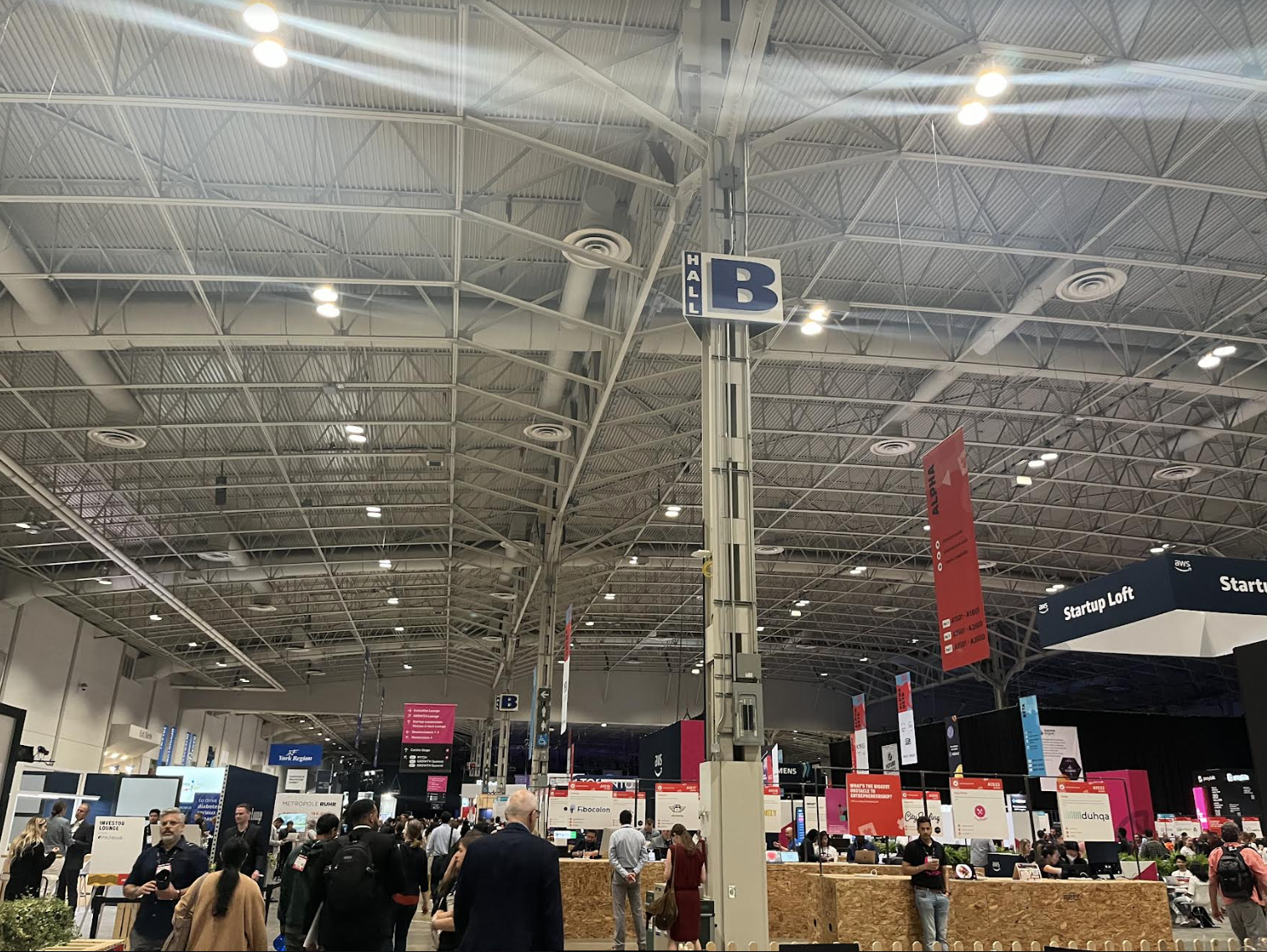
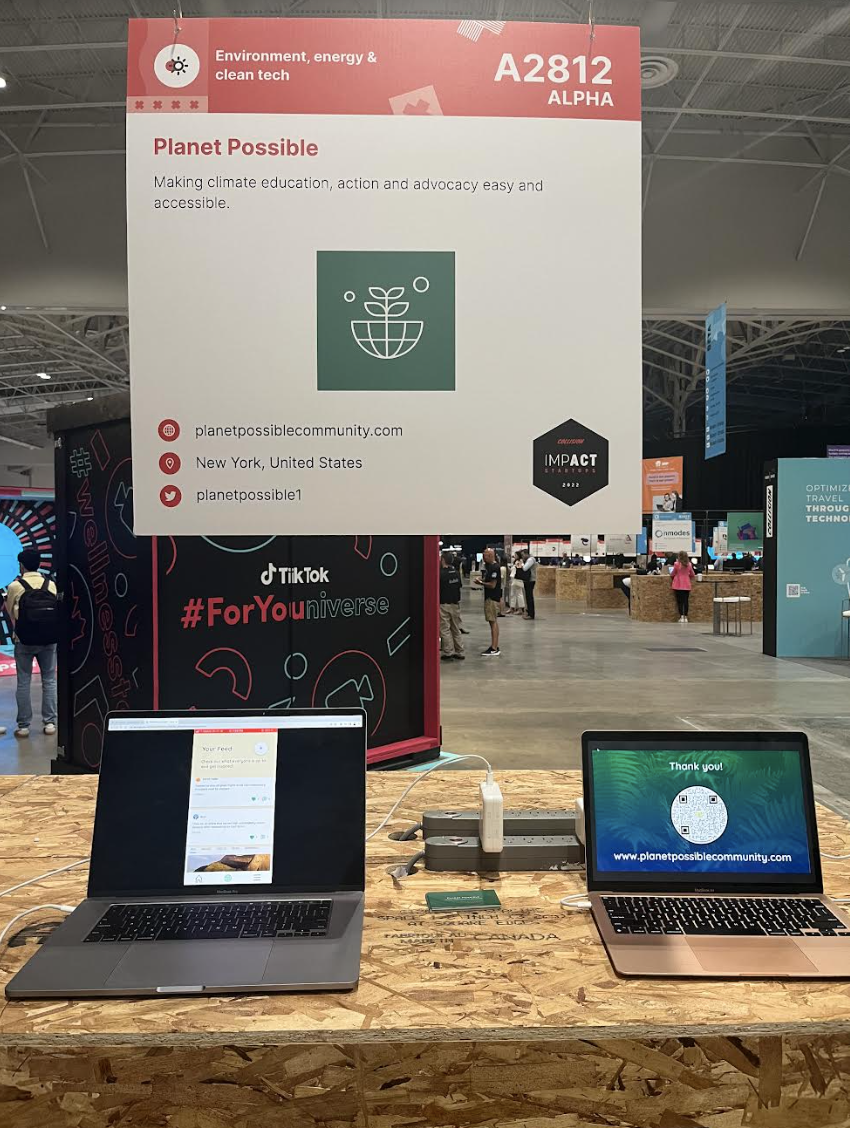
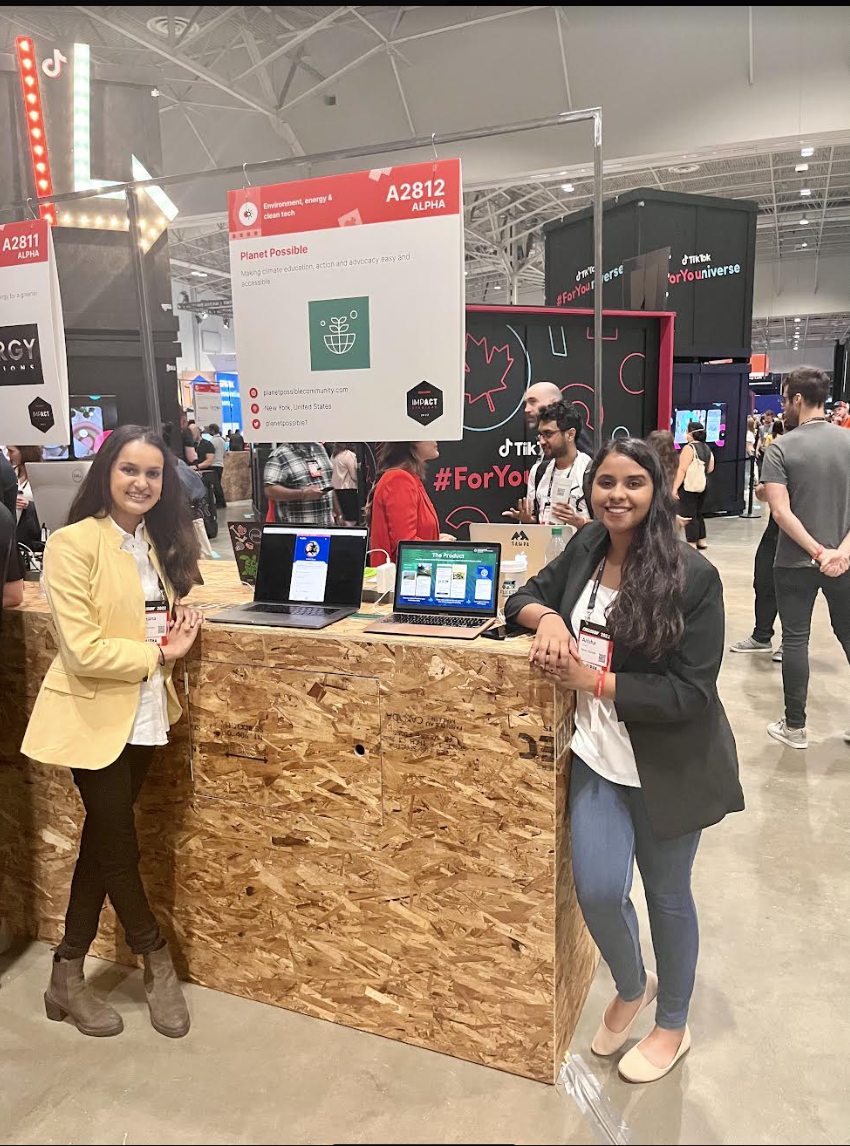
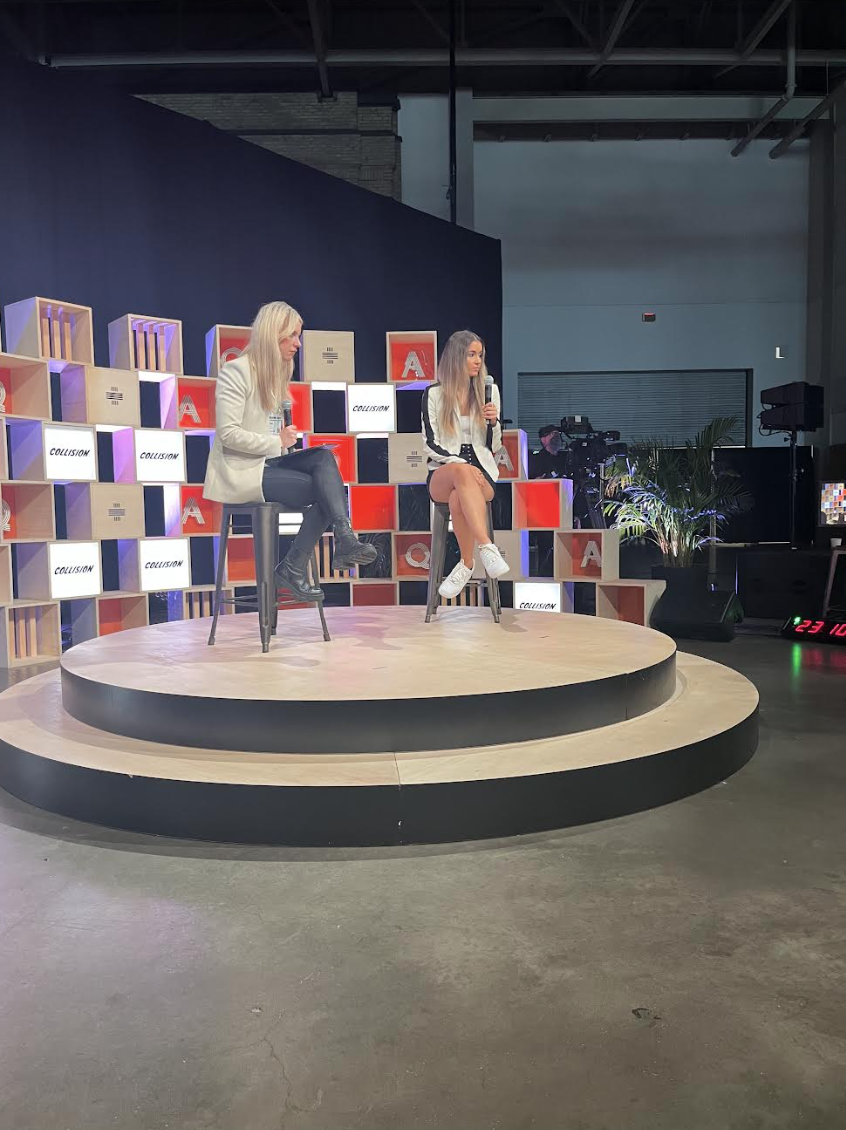
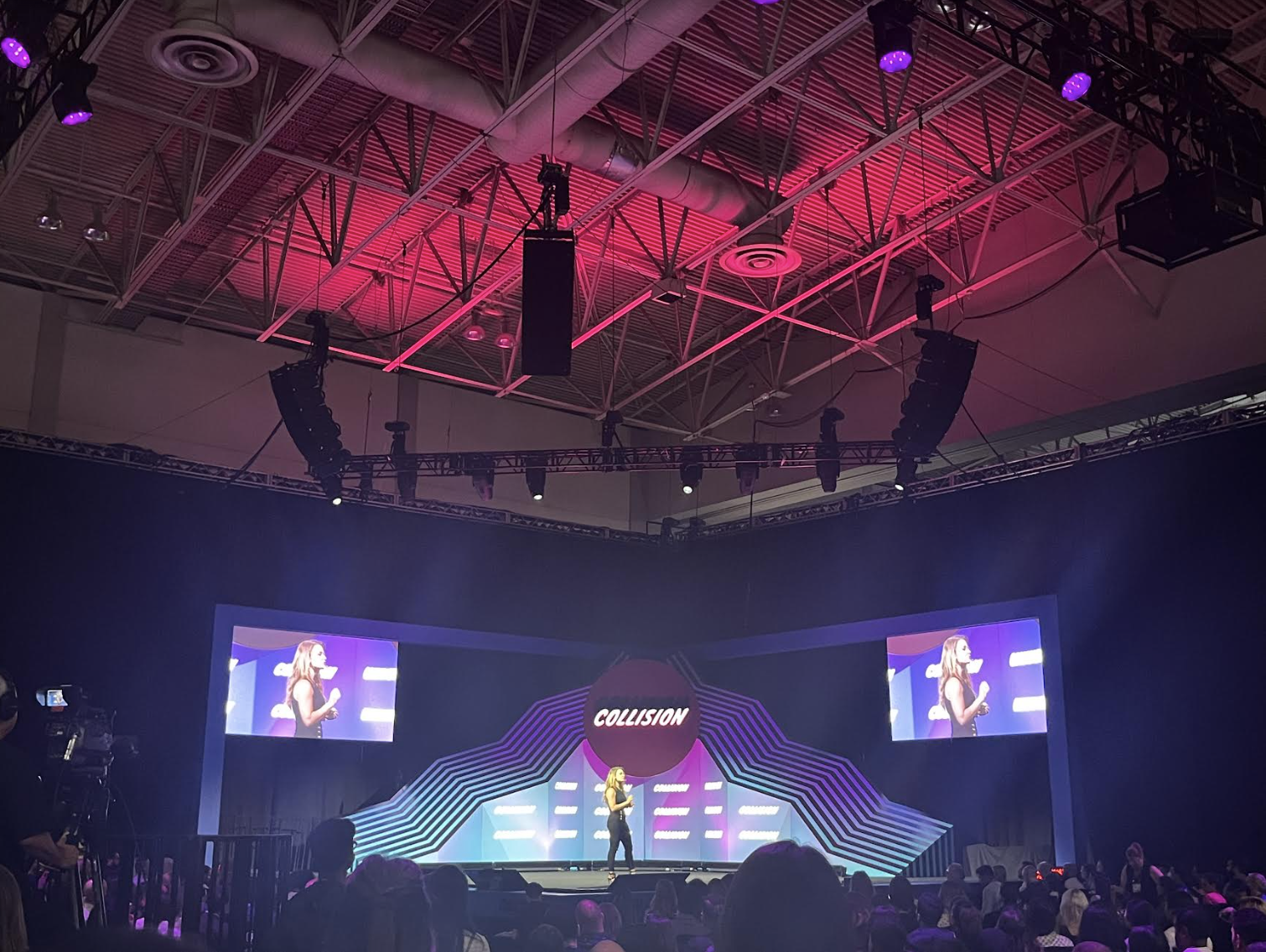
Collision 2022, Toronto
We participated in Collision 2022, a global startup and impact conference that brought together founders, operators, investors, and media across the tech and climate ecosystem. For Planet Possible, this was less about visibility and more about learning. We used the opportunity to test our thinking in real conversations, pressure-test our assumptions, and understand how the problem we were exploring landed with people building and investing in this space.
Through conversations at our booth, we consistently heard that sustainability decision fatigue was a real and familiar challenge. While many attendees cared deeply about climate issues, they also shared how overwhelming it felt to navigate choices in everyday life. These discussions helped us refine our narrative, shifting away from broad sustainability messaging toward a clearer focus on reducing friction and supporting small, realistic behavior changes.
We also connected with climate-tech founders, operators, and investors who were working on scalable solutions in this space. Several conversations led to follow-up interest around advising the project and exploring potential funding pathways, which reinforced that the problem space was not only meaningful, but also relevant and investable.
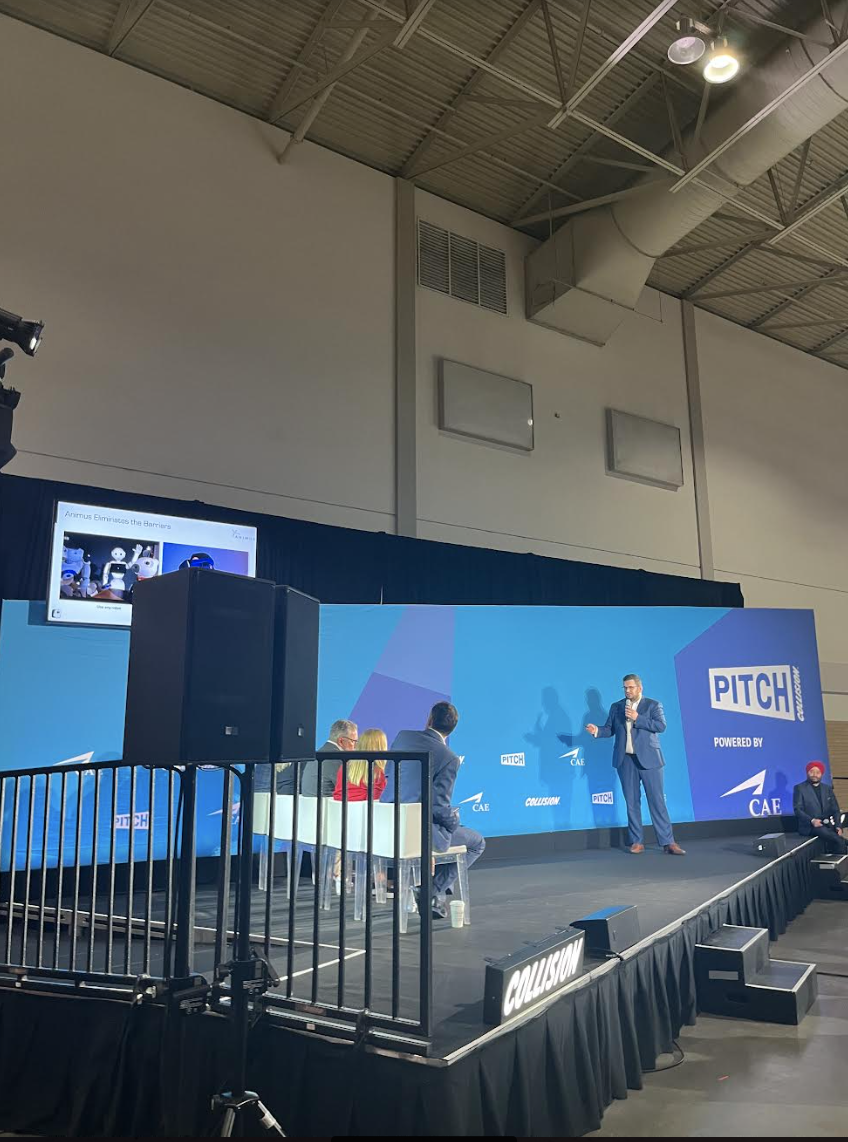
In addition to networking, the conference offered masterclasses on early-stage company building, fundraising, and long-term venture growth. These sessions provided helpful context on how mission-driven startups navigate the tradeoffs between impact, adoption, and scale, and they directly influenced how we thought about Planet Possible’s next steps.
Overall, Collision served as an early ecosystem signal. It helped us sharpen our point of view, clarify where Planet Possible could realistically create value, and better understand how the venture fit within the broader climate tech landscape.
🔮 looking into the future
As of May 2022, we are looking to secure funding from VCs/ Investors preferably in the social impact sector. Interested in hearing our pitch/learning more? Feel free to shoot me a message, my door is always open.